

As the power generation industry faces increasing demands for reliability, flexibility, and economic performance, plant owners and operators are challenged to maximize asset availability while controlling maintenance costs and preparing for future operational needs. MD&A enhances its turnkey service solutions through its Remote Monitoring and Predictive Maintenance program, helping customers improve asset resilience, increase output and availability, and make more informed decisions regarding maintenance, upgrades, and technology investments.
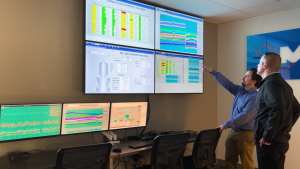
Through secure real-time data acquisition, advanced analytics, and continuous monitoring, MD&A’s Monitoring and Performance Center in Fort Collins, Colorado, provides around-the-clock oversight of critical plant equipment. The center combines automated calculations, machine-learning models, and predictive analytics with the expertise of subject matter specialists across MD&A, including controls, vibration, performance, combustion, turbines, and generators.
This combination of technology and engineering expertise allows emerging issues to be identified earlier, operational risks to be better understood, and maintenance activities to be planned with greater confidence. By transforming plant data into actionable recommendations, MD&A helps customers prepare for outages, prioritize capital investments, optimize maintenance strategies, and improve overall plant performance.
Rather than reacting to alarms, trips, or unexpected equipment failures, plant personnel gain a broader decision window to evaluate options and implement corrective actions. The result is a more proactive approach to asset management that supports higher availability, improved reliability, increased output, and long-term operational success in today’s dynamic power generation market.
 |  |
What is Remote Monitoring?
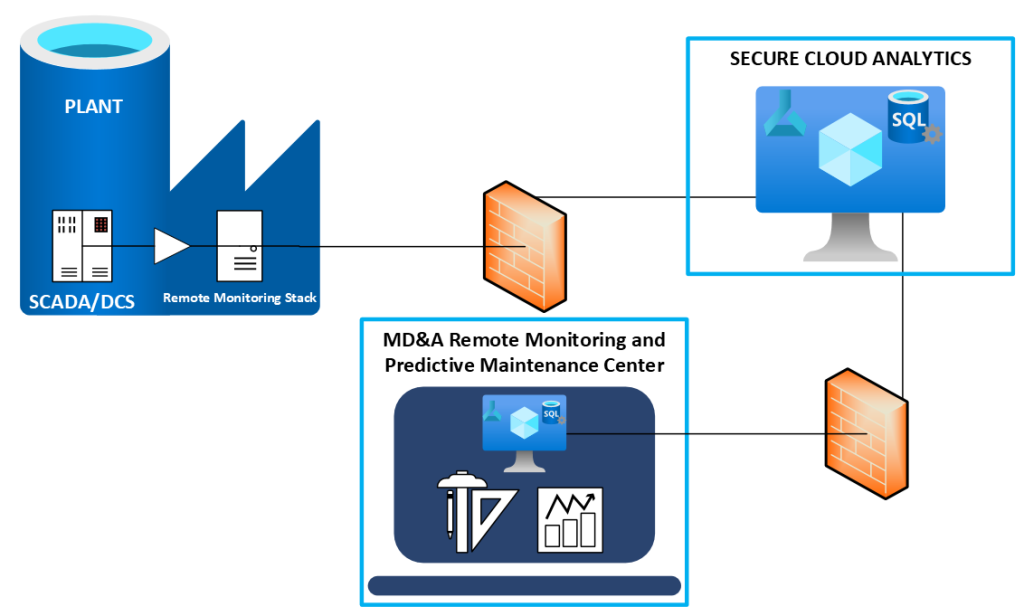
A remote monitoring program securely streams selected real-time plant data to an offsite analytics environment. MD&A’s program utilizes automated calculations and machine-learning models to continuously assess equipment behavior across performance, vibration, combustion, and controls response. Alerts are then reviewed by experienced engineers who can distinguish developing equipment issues from instrumentation problems or a normal operating change.
This combination matters because analytics can review far more data, and far more operating states, than a periodic manual process. Expert oversight adds the plant and equipment context needed to validate an alert and determine whether the next step should be continued observation, instrumentation checks, additional testing, maintenance planning, or a controlled shutdown.
The result is a longer decision window. Instead of first learning about an issue at the alarm or trip threshold, the plant may have days, weeks, or months to investigate, source parts, coordinate specialists, and align the work with an outage.
Recent Use Cases
Case Study 1: Preventing a Repeat Catastrophic Failure
At one plant, a controls upgrade changed the behavior of a steam turbine stop-valve test. When the test did not perform as expected, the result was initially attributed to the controls change rather than investigated as an equipment condition. A later grid event led to an overspeed event and catastrophic damage.
The unit was rebuilt in less than 12 months with support from MD&A and Mitsubishi Power. Remote monitoring with expert support was added as part of the plant’s effort to improve oversight of abnormal behavior and test results.
Months later, the stop-valve test again failed to behave correctly. This time, the abnormal result was escalated. The unit was shut down for inspection, and the inspection identified significant scaling. The developing condition was addressed before it could contribute to a repeat event.
The lesson is broader than the individual valve. A test result that looks like a nuisance, a controls artifact, or an isolated exception can be the earliest visible indication of a mechanical problem. Continuous monitoring and defined escalation help ensure that abnormal behavior is investigated rather than normalized.
Case Study 2: Vibration Detection Before the Plant Alarm
On a GE® 7FA gas turbine, machine-learning models compared actual relative-vibration behavior with the response predicted for the unit’s current operating conditions. The actual signal began to diverge from the expected pattern months before a plant vibration alarm was triggered. Seismic vibration data provided further indication that the behavior was developing rather than random.
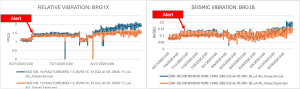
The early warning gave the engineering team time to review the condition before the next major outage. Bearing parts could be identified and made available through the MD&A Bearings, Seals & Hydraulics (BSH) shop, and the unit could be brought down in a planned manner rather than waiting for a traditional alarm or trip to dictate the schedule.
Not every model alert indicates a mechanical defect. Instrumentation issues are common, which is why expert validation is essential. The value is in detecting subtle deviation early, combining multiple signals, and creating enough planning time to separate sensor problems from equipment problems before risk increases.
With MD&A’s specialized divisions, our wide range of subject matter experts can provide analysis and recommendations to address any issue.
Case Study 3: Turning Performance Data into Maintenance Decisions
Remote monitoring is not limited to failure prevention. Continuous performance calculations can track corrected heat rate, corrected power output, corrected pressures and flows, and compressor efficiency using actual operating conditions. Correcting for ambient and operating variability makes it easier to separate normal changes from true performance degradation.
Compressor fouling is a practical example. Wash schedules are often based on fixed intervals or operator judgment. A fixed schedule can lead to washing too early, which consumes outage time and resources before the work is needed, or too late, after output and efficiency have already deteriorated.
Fouling rates are not constant. They vary with ambient conditions, filtration, season, and operating profile.
A 5% airflow reduction can reduce output by up to 8% and increase heat rate by up to 3%. Online washing can help maintain performance, while offline washing can restore performance. The key is using condition and economic impact, rather than the calendar alone, to determine when the work should be performed.
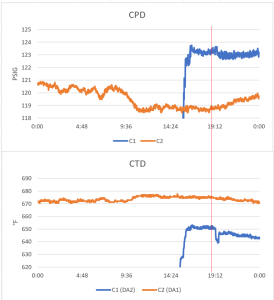
MD&A’s remote monitoring team recently found a compressor showing significant losses in efficiency and approximately 3.3 MW of compressor-related output loss. Investigation identified an open implosion door (on C2 below). After the issue was addressed and an offline water wash was performed, efficiency recovered.
Why MD&A Remote Monitoring ?
Technology alone does not make an operation proactive. An effective remote monitoring program must connect early detection to a disciplined response process. That process includes secure data acquisition, advanced analytics, expert engineering review, clear communication with plant personnel, and a defined path from alert validation to maintenance planning and execution.
When these elements work together, the plant gains more than another alarm system. It gains visibility into emerging equipment conditions before they escalate into operational events. Early insight allows teams to verify instrumentation, evaluate related operating data, review maintenance history, procure parts, coordinate resources, and schedule corrective actions during the least disruptive operating window.
The result is a more informed and proactive approach to asset management. Plants can reduce the likelihood of forced outages, improve maintenance planning, optimize performance, and make better decisions regarding repairs and capital investments.
While no monitoring program can prevent every failure, MD&A’s Remote Monitoring and Predictive Maintenance program helps identify developing conditions sooner, providing the information and decision-making window needed to reduce risk, improve reliability, and maximize long-term asset value.
View our video and then call MD&A’s Turbine and Generator Controls Division today at (970) 224-2223 or use our Contact form.


